
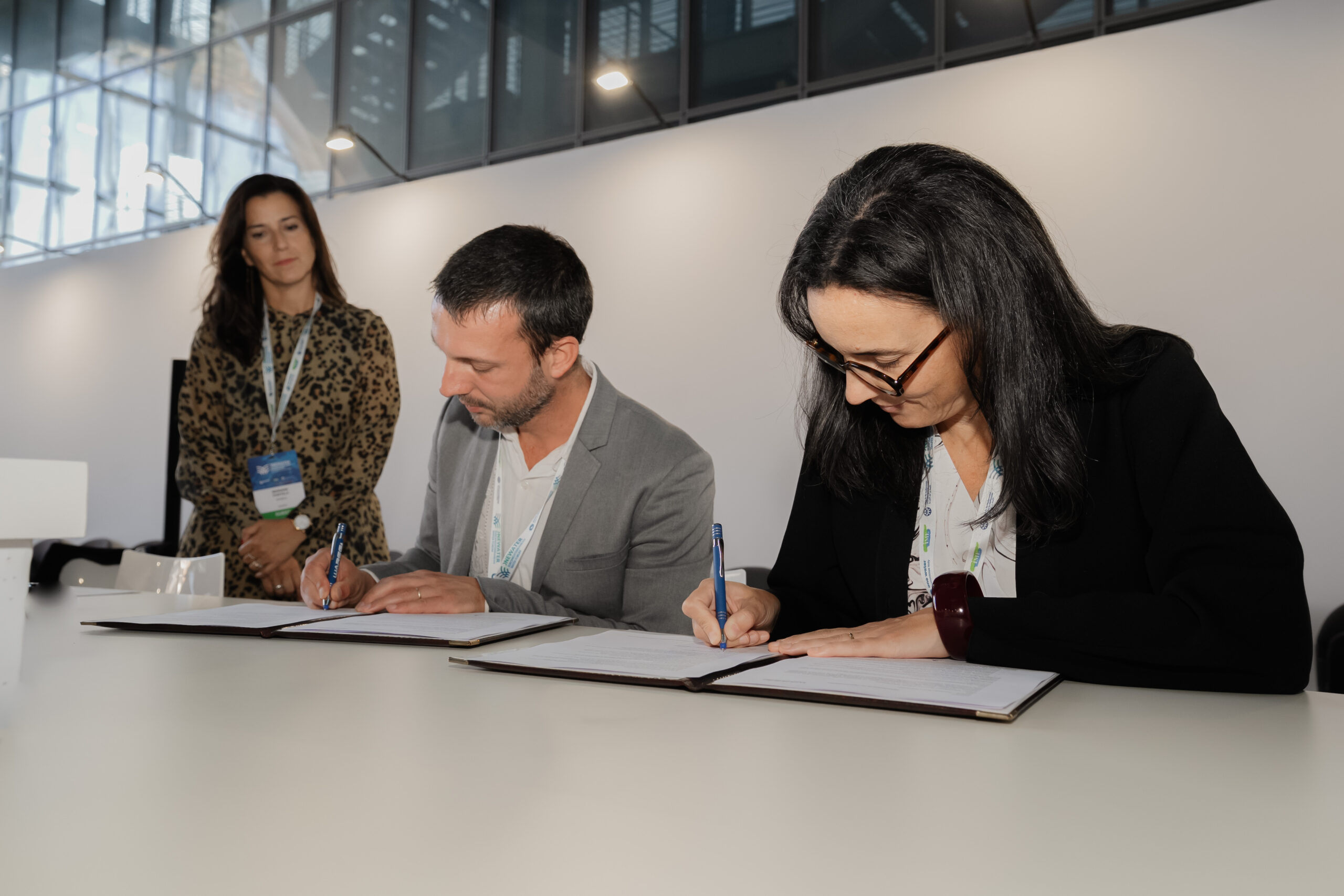
Rome, 29 September 2026 – WAREG and the International Network of Basin Organisations (INBO) have signed a Memorandum of Understanding establishing a framework for closer cooperation between economic water regulators and river basin organisations.
The Memorandum was signed in Rome in the framework of the 39th WAREG General Assembly, where WAREG Members are meeting on 29 and 30 September to discuss key regulatory developments and common challenges affecting the European water sector.
The agreement builds on the complementary roles of the two networks. WAREG brings together authorities involved in the economic regulation of water services, while INBO promotes integrated water resources management at river basin level. Their cooperation is intended to reinforce dialogue between the economic, regulatory and basin-management dimensions of water policy.
The Memorandum provides a framework for exchanges and cooperation on areas of common interest, including water resilience and governance, indicators and data, sustainable investment and affordability, nature-based solutions, water reuse, drinking-water quality, stormwater management and the implementation of European water legislation.
The cooperation is particularly relevant at a time when climate change, increasing water scarcity and growing investment requirements are placing additional pressure on water-management systems across Europe. The signature therefore also closely reflects the broader discussions taking place during the 39th General Assembly. Immediately following the signature, WAREG Members are discussing climate change and water scarcity in Europe and the role of economic regulators in crisis situations, drawing on case studies from Italy, Hungary, Greece and Portugal.